Definition and Key Operational Points
From an operational perspective, native Korean IP refers to prioritizing the use of local IPs, nodes, and routing strategies in the Korean network environment to achieve better local access performance. Core operational focus areas include user distribution, traffic routing, CDN coverage, and local partnerships.
Implementation steps
First, traffic analysis is used to identify the main sources of Korean users, then combined with local CDN or edge node deployment strategies to prioritize traffic to Korean routes; Establishing direct connections with Korean ISPs or cloud services can significantly reduce latency.
Notes
Avoid relying solely on "IP disguise" to achieve localization; optimization should be done simultaneously through routing, DNS, and caching strategies to ensure user experience improves rather than just surface metrics.
Key measures for speed and stability
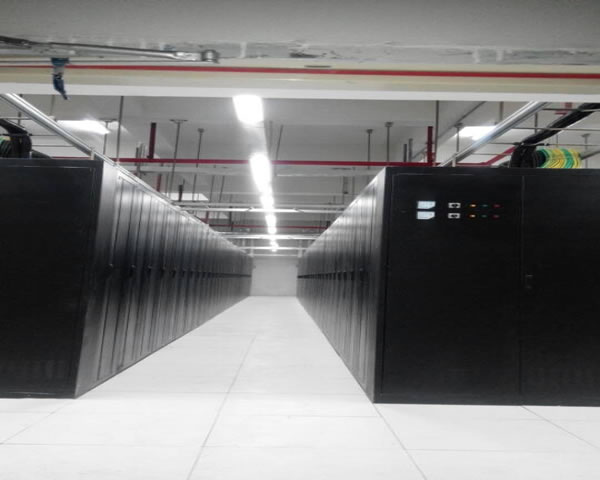
By deploying real nodes in South Korea or enabling localized CDNs, optimizing DNS resolution priorities, and using intelligent routing strategies, access speeds can be significantly improved and packet loss reduced. In terms of stability, focus should be paid to multi-link redundancy and health checks.
Specific steps
1) Deploy cache and application nodes nearby in South Korea; 2) Configure DNS resolution policies so that local users prioritize resolution to Korean nodes; 3) Establish multi-operator links and enable automatic failover.
Notes
Continuous monitoring of link quality is necessary to avoid widespread availability drops caused by single nodes or service provider failures, and capacity estimation should be done carefully to prevent sudden traffic spikes.
Localized operation strategy
Localization is not just about language translation; it also includes content compliance, localization of payments and customer service, and optimizing pages and interactions based on Korean user habits. Combining native Korean IP enables regionalized routing and differentiated content distribution.
Practical steps
1) Based on the IP, determine if the user is visiting from Korea, display localized pages and currency; 2) Optimized caching strategies for South Korea's peak hours; 3) Integration with local payment and customer service systems.
Notes
Ensure localized content complies with laws (such as privacy policies and local advertising regulations), and all localization resources should be cached at Korean nodes to reduce cross-border requests.
Key monitoring indicators
When evaluating, focus on first screen time, full load time, DNS resolution time, packet loss rate, reconnect rate, and user conversion rate. Real User Monitoring (RUM) and Synthetic Monitoring (Synthetic) data should also be compared.
Assessment methods
Through A/B testing, some Korean traffic is directed to the native plan, while another part remains with the old plan, comparing core metrics and business conversion; At the same time, terminal logs are used to analyze and trace the root causes of problems.
Notes
The sample size and time window must be sufficient to avoid data biases caused by short-term network fluctuations or promotional activities; Long-tail pages should also be sampled and monitored.
Approach to balancing compliance and cost
Operations must balance compliance risks, cost inputs, and experiential benefits. Prioritize evaluating traffic value density and choose a hybrid solution: enable localized nodes in key areas, and use remote nodes or on-demand acceleration in low-frequency areas.
Practical advice
Start with phased pilots: enable Korean localization services during high-value pages and peak traffic periods, gradually scaling up. Leveraging elastic cloud and a pay-per-traffic CDN model can reduce long-term fixed costs.
Notes
Comply with local data sovereignty and privacy regulations, sign necessary Data Processing Agreements (DPAs), and conduct audits of logs and user data to avoid operational risks or additional costs caused by compliance issues.
- Latest articles
- Before Choosing A Hong Kong High-defense Exemption Server, You Need To Pay Attention To Security And Contract Terms
- Experts Recommend Paying Attention To ISP And Routing Issues When Assessing The Speed Of Vietnamese VPS
- Cost Control Tips For Korean CN2 Site Clusters: Bandwidth Billing And Resource Allocation Recommendations
- Common Causes Of Tencent Cloud Singapore Server Failures And Best Practices For Prevention
- Evaluation Of The Capabilities Of Singapore Cloud Server CN2 Service Providers In Supporting Cross-border Business
- Case Study Of Application Of Hong Kong Sha Tin CN2 Console In Game Acceleration And Live Streaming
- Judging From Case Studies Whether US High-defense Servers Are Resistant To Complaints: Complaint Types And Final Handling Results Statistics
- Remote Management Practice: US VPS Windows 2003 Remote Desktop And Permission Configuration Instructions
- Key Points Reflected In The Malaysian Cloud Server Price List Comparing Nodes From Different Regions
- A Guide To Choosing Which Cloud Server To Use In Vietnam To Meet Regulatory Compliance And Data Residency Requirements
- Popular tags
-

The Player Community Guide Explains What It Means When The CS Korean Servers Are Offline And Its Impact On Matchmaking
Player Community Guide: Explain what it means exactly when the CS Korean server is offline, its impact on matchmaking, technical reasons, real-world examples, server configuration examples, as well as prevention and mitigation measures. -

The Best Way To Find Free Proxy Servers In Korea
this article will explore the best ways to find free proxy servers in korea, covering a variety of methods and tools to help users obtain stable network connections. -

The Impact Of Korean Lightweight Server Brands On Gamers
a detailed evaluation of the impact of korean lightweight server brands on gamers, exploring their performance, advantages and cost-effectiveness.